Heimat (model)
(photography, metal and glass object, living plant)
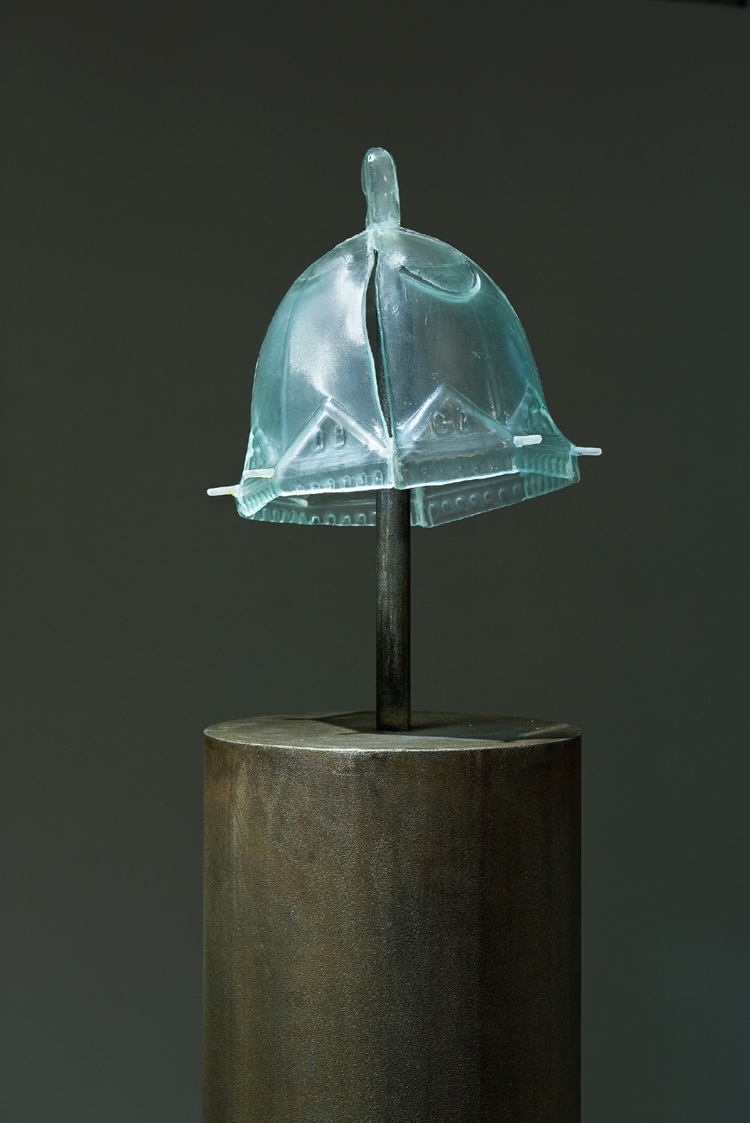
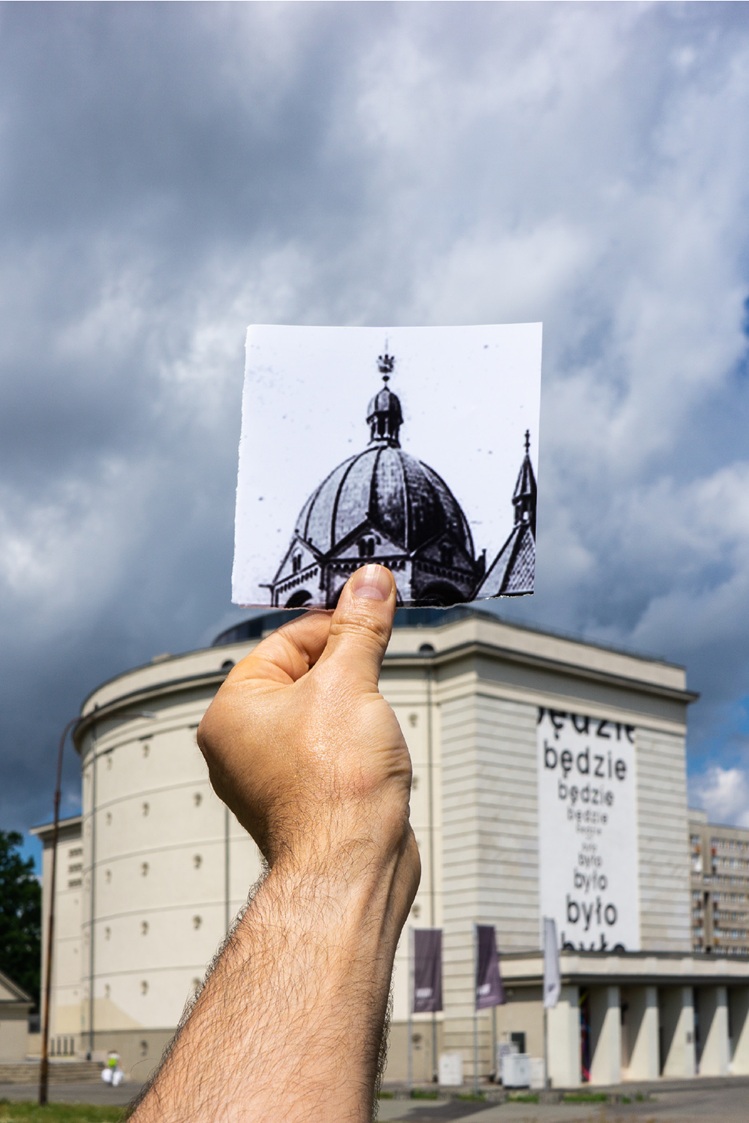
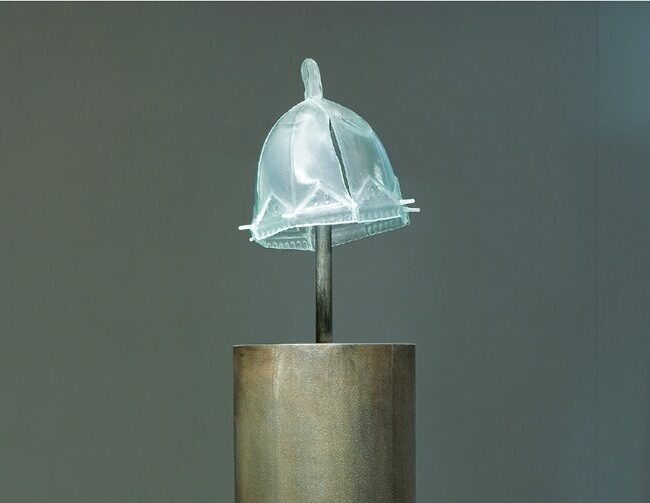
“(…) Tom Swoboda’s work is an architectural model of the dome of the now defunct New Synagogue. Designed by Edwin Oppler and built in the years 1865-1872, the Neo-Gothic-Neo-Romanesque temple of liberal Judaism was the second largest synagogue in Austria and Germany, its dome was 73 meters high. The new synagogue in Breslau was completely burnt down by the Nazis during the Crystal Night of November 9-10, 1938, in the place where it stood at the intersection of Podwale and Łąkowa Streets, today there is only a commemorative monument. The reduced model made of broken glass is an attempt to restore the architecture, reconstructing its form based on archival prints and with reference to the history of the building itself. At the same time, the small size of the sculpture brings to mind home objects such as crystal decorations or architectural miniatures brought as souvenirs from distant places. Swoboda refers the title term Heimat – meaning patrimony – to the concept of a private homeland and its relationship with faith, asking questions about the way of building the identity of societies in the face of the erected, ruined and forgotten architecture.”
“(…) Praca Toma Swobody jest architektonicznym modelem kopuły nieistniejącej już Nowej Synagogi. Ta zaprojektowana przez Edwina Opplera i wybudowana w latach 1865-1872 noegotycko-neoromańska świątynia liberalnego Judaizmu była drugą największą synagogą Austrii i Niemiec, jej kopuła miała wysokość 73 metry. Nowa Synagoga w Breslau została doszczętnie spalona przez hitlerowców podczas kryształowej nocy z 9 na 10 listopada 1938, w miejscu, gdzie stała u zbiegu ulic Podwale i Łąkowej, dziś widnieje jedynie upamiętniający pomnik. Pomniejszony model wykonany z potłuczonego szkła jest próbą przywrócenia architektury, rekonstruując jej formę w oparciu o archiwalne ryciny i w nawiązaniu do samej historii obiektu. Jednocześnie, niewielki rozmiar rzeźby przywodzi na myśl domowe przedmioty, jak kryształowe dekoracje czy architektoniczne miniaturki przywożone jako pamiątki z odległych stron. Swoboda odnosi tytułowy termin Heimat – oznaczający ojcowiznę – do pojęcia ojczyzny prywatnej i jej relacji z wiarą, stawiając pytania o sposób budowania tożsamości społeczeństw wobec wznoszonej, rujnowanej i zapominanej przez nie architektury.”